Blog
Trotula de Ruggiero, the medieval woman doctor our street is named after
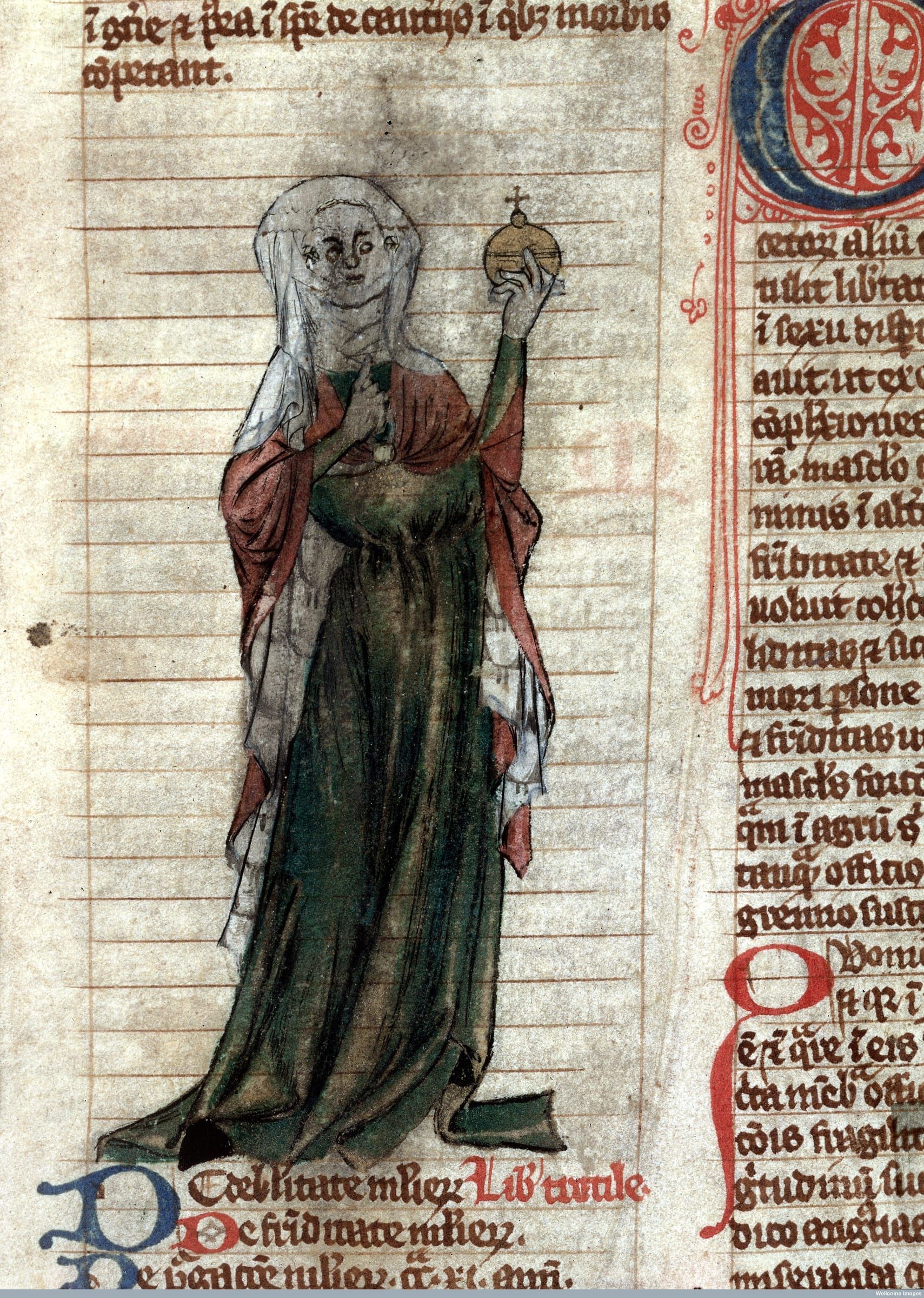
Photo: Wellcome Collection, public domain (CC0), via Wikimedia Commons, resized
Early English medical writing mentions a certain "Dame Trot". She isn't a fairy-tale character: she's the echo, carried all the way to England, of a woman who practised medicine in Salerno in the Middle Ages. The old-town street where our B&B stands bears her name.
Who she was
Historians today mostly call her Trota (or Trocta); "Trotula" is a diminutive. She lived in Salerno in the 12th century, probably in its first half, in the days of the famous Salerno Medical School. Some 13th-century writers already recall a woman physician by that name.
We know very little about her life, and on one point we should be honest: the surname "de Ruggiero" comes from a local tradition linking her to a noble Salerno family, but historians have found no documents to back it up. The name on the street sign, in short, owes more to legend than to the archives.
A name that became a book
The strangest part of the story concerns her writings. In the 12th century, three medical texts on women's health were in circulation. Later they were bound together into a single collection, and since only one of the three carried an author's name, Trota's, the whole work ended up credited to her. The title "Trotula", meaning roughly "the little work of Trota", was later read as the name of a person.
That collection was a medieval bestseller: around 140 Latin copies survive, plus some sixty translations into everyday languages. In 1544 it was printed in Strasbourg as De mulierum passionibus, and it contains obstetric advice that was significant for its time.
The 1985 discovery
For centuries people argued over whether Trota had existed at all. Then, in 1985, the American historian John F. Benton found, in a manuscript kept in Madrid, a text called Practica secundum Trotam, "medical practice according to Trota". About three quarters of it deals not with women's conditions but with fevers, wounds and all sorts of ailments: the portrait of an all-round physician, not just a midwife.
The women of Salerno
Trota wasn't an exception. Medieval sources speak of the mulieres salernitanae, the women of Salerno who treated the sick, and records from the period preserve a good number of traces of them. Trota is simply the best known.
If you're passing by
Via Trotula de Ruggiero is a narrow lane in the old town, a few minutes from the Cathedral and from the Giardino della Minerva, the medicinal garden linked to the same Medical School. Walking it with this story in mind makes it look a little different.